What A Prison Pitch Competition Taught Me About Leadership


I didn’t know what to expect walking through the security checkpoint. I’d emptied my pockets, left my phone in the car with my husband Michael, and arrived with nothing but my driver’s license and a willingness to show up. What I found on the other side affirmed and sharpened what I believe about leadership, identity, and the power of the stories we tell ourselves.
I had volunteered as a coach with Defy Ventures, a nonprofit that runs entrepreneurship training programs inside correctional facilities. Their flagship program, CEO of Your New Life, equips incarcerated people—called Entrepreneurs in Training, or EITs—with business skills, personal development tools, and a belief in their own capacity to build something meaningful. The program’s recidivism rate is under 10%, compared to a national average above 40%.
Walking In With Assumptions I Didn’t Know I Had
I’ll be honest: I was nervous. I was told not to wear certain colors, not to bring a bag or keys, and that physical contact was limited to a handshake, fist bump, or high-five. We were to exchange first names only and discussing why anyone was there was off the table.
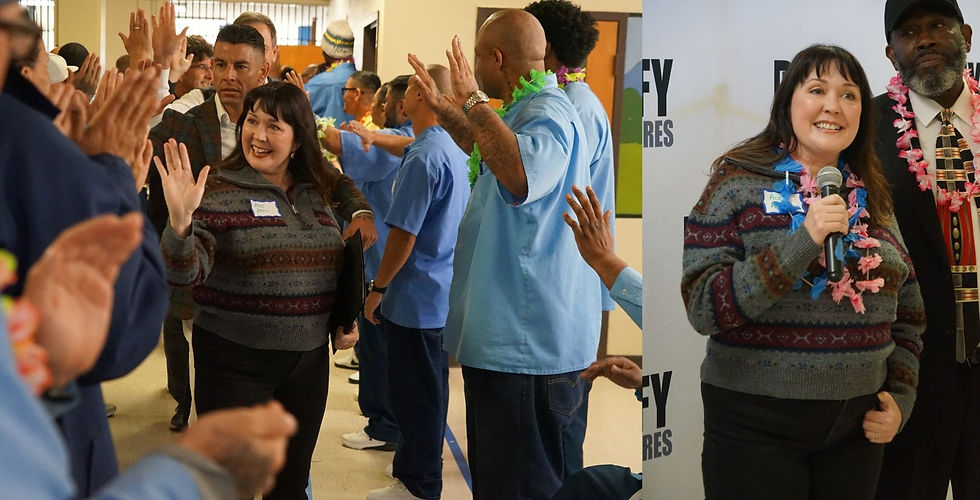
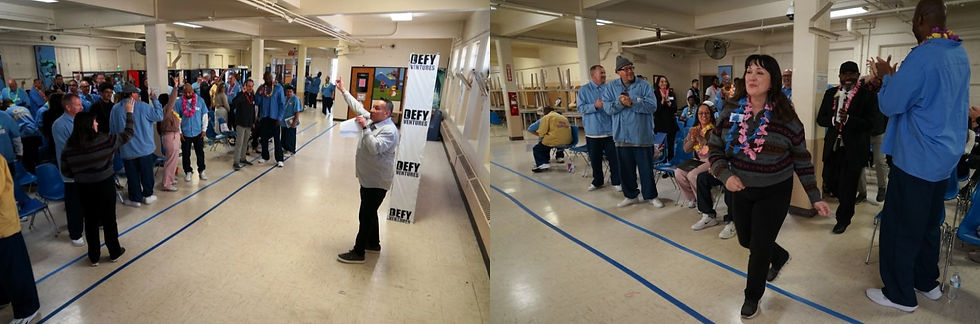
As we filed in through the final security door, the men in the program formed two lines and high-fived us in. There was a DJ and cheering as coaches danced down a center aisle in groups of five and introduced themselves with a microphone.I don’t love dancing when people are watching me and I did it anyway. Which was the point! Before any business content happened, we had to become human to one another. The day was intentionally designed to dismantle the invisible walls we all carry—our assumptions, our social armor, our instinct to stay guarded.
They Were More Ready Than Many Rooms I’ve Walked Into
In the afternoon, the EITs rotated through small coaching circles, each delivering a one-minute professional introduction and a three-minute business pitch. Constraints: under $20,000 in working capital, no storefronts, cash-positive within two to three months. The top five finalists presented to the full room, with cash prizes awarded upon release.
Some had their introductions down cold—strong eye contact, clear delivery, a compelling point of view. One man I coached spent most of his pitch on risks. I told him exactly what I’d tell any executive preparing to present to a board: lead with the value and let people lean in before you acknowledge the challenges.
A couple of the men I coached made it to the finals; watching them win was a highlight of this year.
The Step-Forward Exercise and What It Revealed
Mid-morning, we lined up on opposite sides of a strip of blue painter’s tape. A facilitator read statements. You stepped forward if it applied to you.
“My parents paid for my college.”
“I was raised by a teenage mother.”
“I was kicked out of my home before I was 18.”
“I have been here for more than ten years.” Twenty years. Forty years.
I knew nothing about what any of these men had done and I still don’t. But I know what I saw: people who were more than the worst chapter of their story—who, when given structure, investment, and the genuine belief of others, showed up with discipline, creativity, and heart.
The Identity Shift Is The Work
Defy Ventures does more than just teach business skills, it offers people a new identity to inhabit. When you walk into a Defy class, you’re no longer “inmate xyz .” You’re an Entrepreneur in Training and the CEO of Your New Life. That language is deliberate.
This is something I think about constantly in my executive coaching work. The leaders I work with aren’t incarcerated, obviously. But many are constrained by an identity that no longer fits—a story about who they are and what they’re capable of that was written in an earlier chapter. The VP of Sales who still sees herself as 'just a quota carrier'" or the Chief Revenue Officer who hasn't yet stepped into the growth strategist role that's been waiting for him. The executive who leads brilliantly in the room but can’t articulate her value to the board.
Research consistently shows that leadership identity isn’t fixed—it shifts in response to new experiences, relationships, and narrative frames. Boyatzis’ Intentional Change Theory makes this explicit: sustainable leadership growth requires envisioning an aspirational identity, not just improving skills. The identity shift is not a byproduct of the work - it is the work.
What I Carry With Me
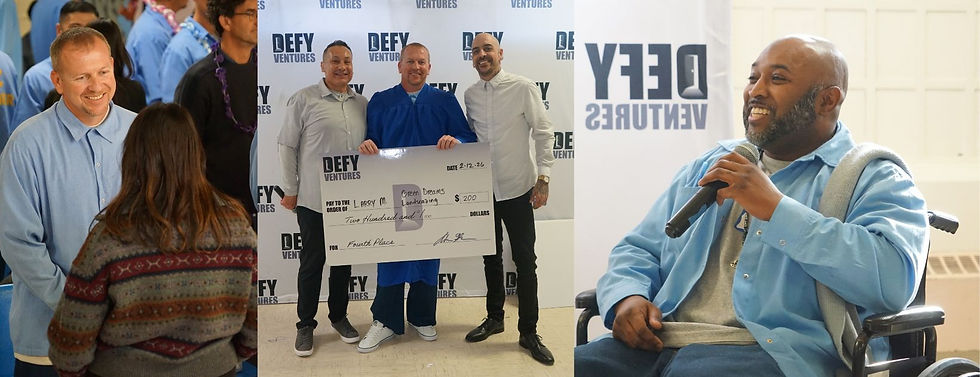
At the end of the day, the men who completed the program walked across a stage in caps and gowns. Many had never had a graduation before. Their families were there, the warden was there, they had professional photos taken.
It’s amazing to watch any human being claim a new chapter—publicly, in community, witnessed. I went in looking for hope and inspiration. I found both, along with something I didn’t expect: a sharper version of what I believe about leadership.
We only ever see one part of a person at a time and when someone genuinely believes in your capacity to become something new—when they invest in you, structure the conditions for your growth, and hold you to a high standard—people rise. That’s true in a correctional facility and it’s true in a boardroom.
One of the former program graduates who now coaches others described the day he stopped seeing himself as a person defined by his worst decision and started seeing himself as someone building something. He said it was the first time in his life he felt like the future belonged to him.
That is the work of leadership development, at every level. Not skill acquisition—self-renewal.
Want To Explore This Work Further?
If this resonates, I’d love to explore it with you. Learn more about my executive coaching work, or subscribe to my newsletter for more on strategic leadership, board communication, and the human side of executive performance. And if you’re curious about Defy Ventures, visit their website—volunteering as a coach is open to all business professionals, and I can say from experience: you’ll get more out of it than you give.


